Strategic Gateway
BIG-B upgrade opens new horizons for Bangladesh
Japan-backed initiative offers opportunities to transform Bangladesh into a regional aviation, logistics and industrial hub, but experts warn that investment reforms and cautious geopolitical engagement will determine its success.
 Desk Report
| Published: Sunday, November 01, 2026
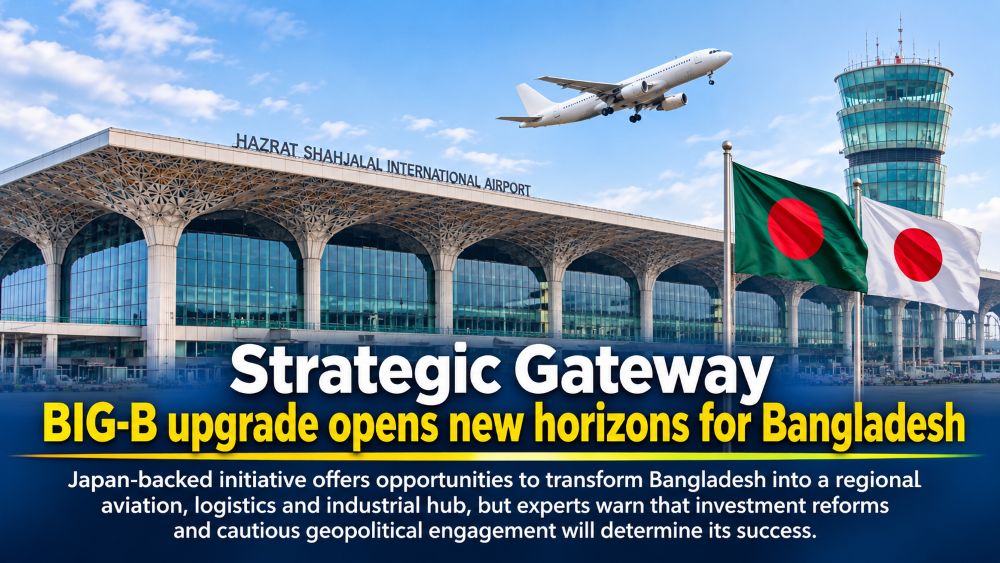
The upgraded “BIG-B for Shared Prosperity” initiative between Bangladesh and Japan could accelerate the country's emergence as a regional connectivity, logistics and industrial hub, opening new opportunities for aviation, maritime trade, infrastructure development and foreign investment.
However, turning the ambitious framework into tangible economic gains will require stronger investment institutions, reliable energy supplies, improved infrastructure and careful management of geopolitical commitments, according to Professor Shahab Enam Khan, Executive Director of the Bangladesh Center for Indo-Pacific Affairs.
Describing the initiative as a positive development for Bangladesh and the wider region, Shahab said the expanded framework represented a logical progression from the original Matarbari-centred development concept.
"The new framework moves the old Matarbari-centred idea into a wider frame of connectivity, energy resilience, rules-based investment and maritime safety," he told UNB.
He described it as a sensible direction for Bangladesh's ambition to become a major logistics and industrial hub.
The upgraded initiative was agreed upon during the October 27 summit in Tokyo between Prime Minister Tarique Rahman and Japanese Prime Minister Sanae Takaichi.
The two leaders agreed to transform the Bay of Bengal Industrial Growth Belt (BIG-B) into “BIG-B for Shared Prosperity”, broadening cooperation beyond traditional infrastructure development.
The framework rests on four pillars: stronger connectivity, preparedness for natural disasters and geopolitical risks, public-private partnerships for economic growth and rule-making, and cooperation for peace and stability.
Aviation, ports and logistics connectivity
For Bangladesh's aviation and tourism industries, the initiative carries particular significance because improved airport infrastructure and integrated transport networks could strengthen international connectivity and facilitate greater passenger and cargo movement.
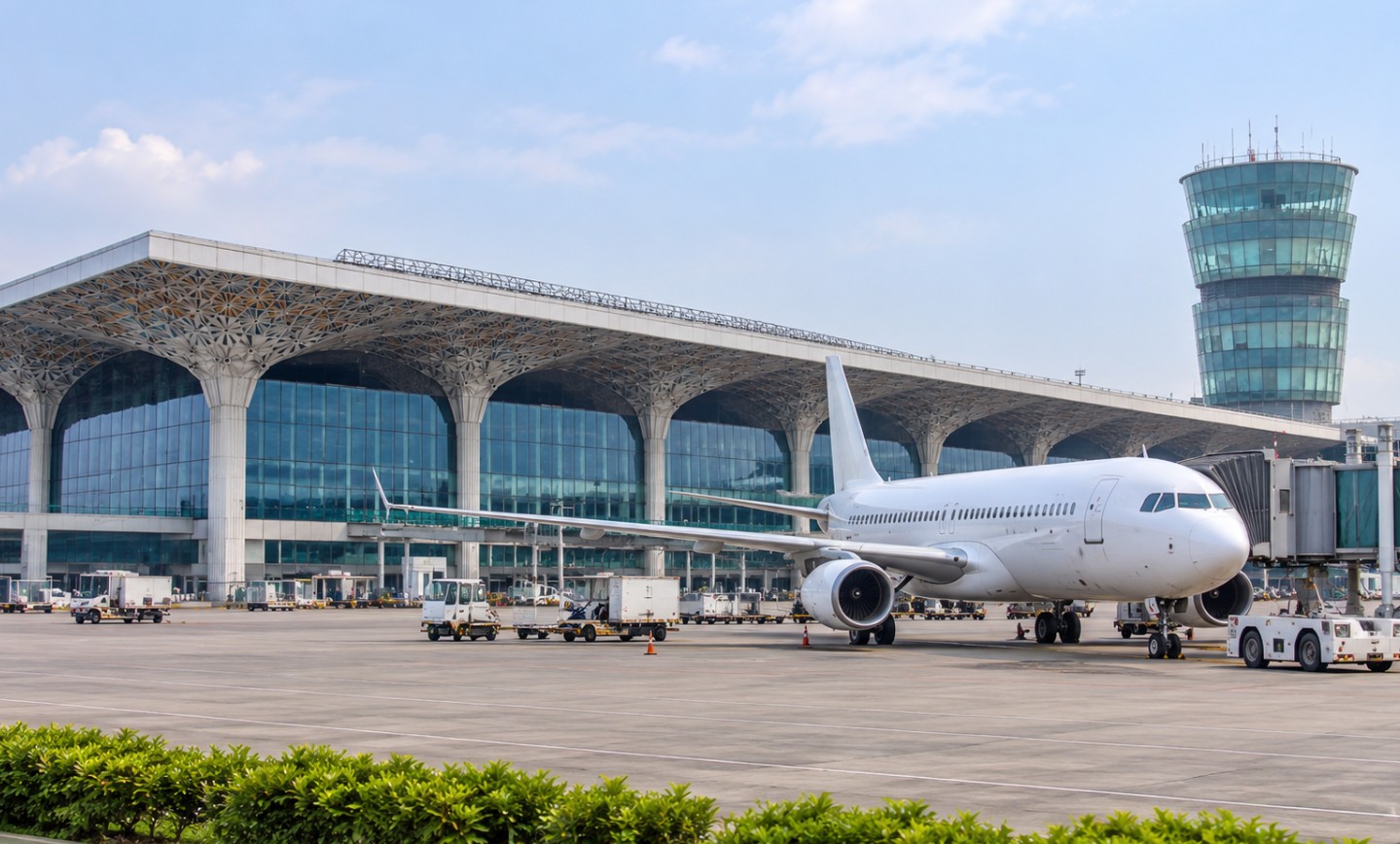
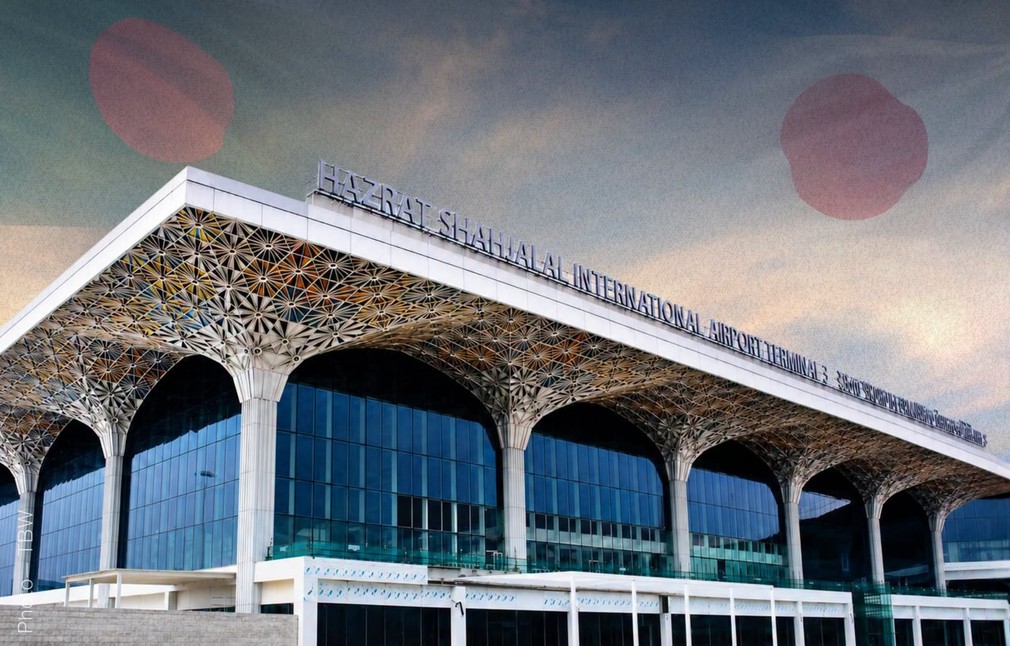
The two governments agreed to advance preparatory work for the early operationalisation of the Third Terminal at Hazrat Shahjalal International Airport in Dhaka.
The terminal, alongside improved urban transport and port connectivity, could help Bangladesh strengthen its position as an international transport gateway.
The summit also highlighted the early implementation of Dhaka's Mass Rapid Transit projects and future Japanese cooperation concerning the operation and management of Matarbari Deep Sea Port.
These projects are intended to support the development of an integrated network linking aviation, maritime transport, industrial production and international supply chains.
Under the original BIG-B vision, the Dhaka-Chattogram-Cox's Bazar economic corridor was envisaged as a major industrial and logistics belt connecting Bangladesh with regional markets.
The expanded framework places greater emphasis on resilience, diversified connectivity and stronger integration into global value chains.
Gateway to Southeast Asia
Professor Shahab said Japan's involvement was especially important amid growing uncertainties surrounding regional trade routes and supply chains.
He observed that the politicisation of trade and connectivity in Bangladesh's neighbourhood had demonstrated the need for more resilient international transport links.
Japan's role in strengthening Bangladesh's eastward connectivity towards Myanmar and Southeast Asia could therefore become strategically significant.
"It also opens a path towards Southeast Asia, and towards a free and open Bay of Bengal all the way to the Strait of Malacca," he said.
He suggested that Bangladesh and Japan shared important interests in regional connectivity, maritime stability and economic cooperation.
However, he cautioned that Dhaka should avoid taking on excessive geostrategic commitments simultaneously.
According to Shahab, Japan would find Bangladesh a more rewarding partner by engaging with the country on the basis of its own geography, development priorities and national interests rather than through the interests of other regional actors.
Investment prospects worth $6.3 billion
The initiative has also generated considerable interest because of the scale of potential Japanese private investment.
During the Tokyo summit, Prime Minister Takaichi indicated that Japanese private investment in Bangladesh could reach one trillion yen, approximately US$6.3 billion, over the next five years.
The projected investment could create around 200,000 jobs, while Japan has expressed its intention to dispatch a business mission to Bangladesh.
Such investment could support industrial expansion, transport infrastructure, technology transfer and stronger logistics services.
However, the projection does not constitute a guarantee that the entire amount will materialise.
Shahab emphasised that implementation, rather than diplomatic announcements, would ultimately determine the initiative's success.
"Delivery would decide everything," he said.
He pointed to longstanding concerns among Japanese companies regarding energy security, infrastructure limitations and unpredictable customs and taxation procedures.
Addressing these obstacles would require sustained institutional reforms, adequate staffing and stronger private-sector participation.
He welcomed Japan's support for improving Bangladesh's investment environment but stressed that lasting solutions must come from domestic reforms.
Maritime safety and economic resilience
Beyond infrastructure and investment, the upgraded BIG-B framework also incorporates cooperation on maritime safety, cybersecurity and wider economic resilience.
Japan has announced the provision of a patrol vessel to strengthen Bangladesh's maritime security capabilities.
Professor Shahab said both countries had an interest in presenting the expanded cooperation as a partnership for resilience and shared prosperity.
Such an approach, he suggested, could help maintain confidence among Bangladesh's trading, strategic and development partners.
Meanwhile, State Minister for Foreign Affairs Humaiun Kobir clarified that the BIG-B discussions during the Prime Minister's Japan visit were confined to bilateral economic cooperation.
He said no third country was discussed and that any future initiative involving additional countries would require their participation in the relevant negotiations.
The clarification followed questions about whether the upgraded initiative could eventually incorporate neighbouring economies into a wider regional industrial and transport network.
Promise meets implementation challenge
Japan has long been a major development partner for Bangladesh, supporting transport infrastructure, power generation, industrial development and connectivity projects.
The upgraded BIG-B framework presents an opportunity to build on that relationship while positioning Bangladesh more prominently within regional and global supply chains.
For the aviation sector, progress on HSIA's Third Terminal and integrated transport infrastructure could strengthen international air connectivity and support cargo, business travel and tourism growth.
For maritime trade, efficient operation of Matarbari Deep Sea Port could improve logistics competitiveness and create new opportunities for industrial development.
Yet the initiative's success will depend on translating diplomatic commitments into functioning infrastructure, predictable regulations and commercially viable investments.
As Professor Shahab cautioned, Bangladesh must strengthen its institutions while maintaining a careful balance between economic opportunities and geopolitical responsibilities.
The strategic opportunity is substantial, but the real test will be whether Bangladesh can transform the upgraded BIG-B vision into efficient connectivity, sustainable investment, and measurable economic benefits.

Make Comment
Login to CommentPopular News





Subscribe to News Letter
Latest News