Golf tourism a highly valuable market: Khabir
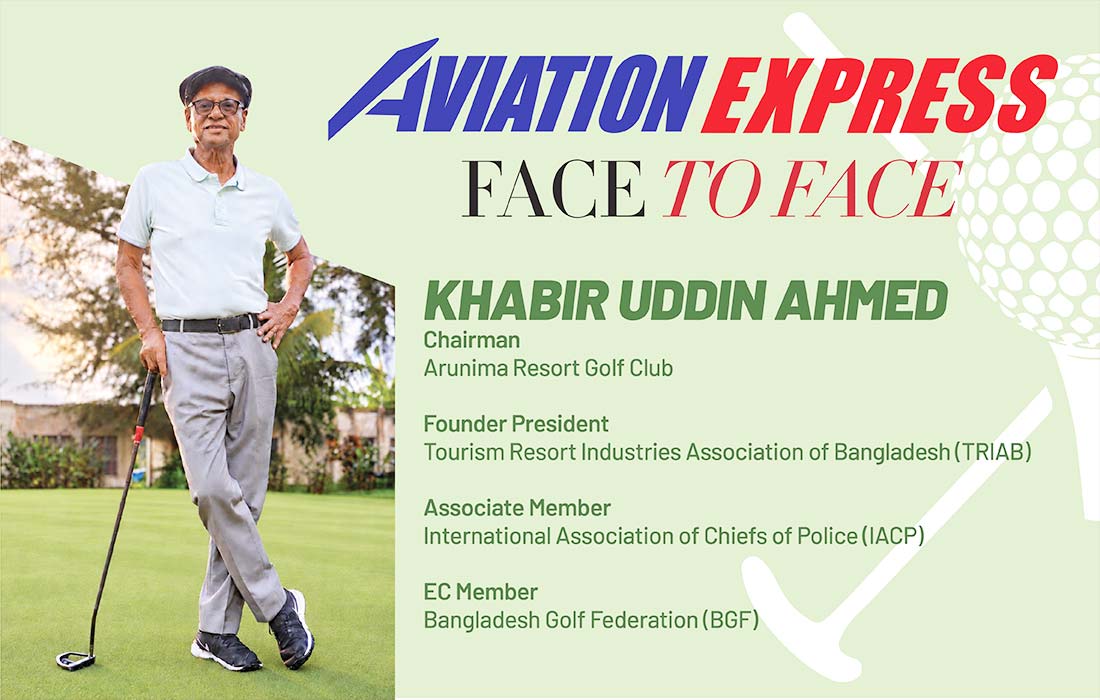
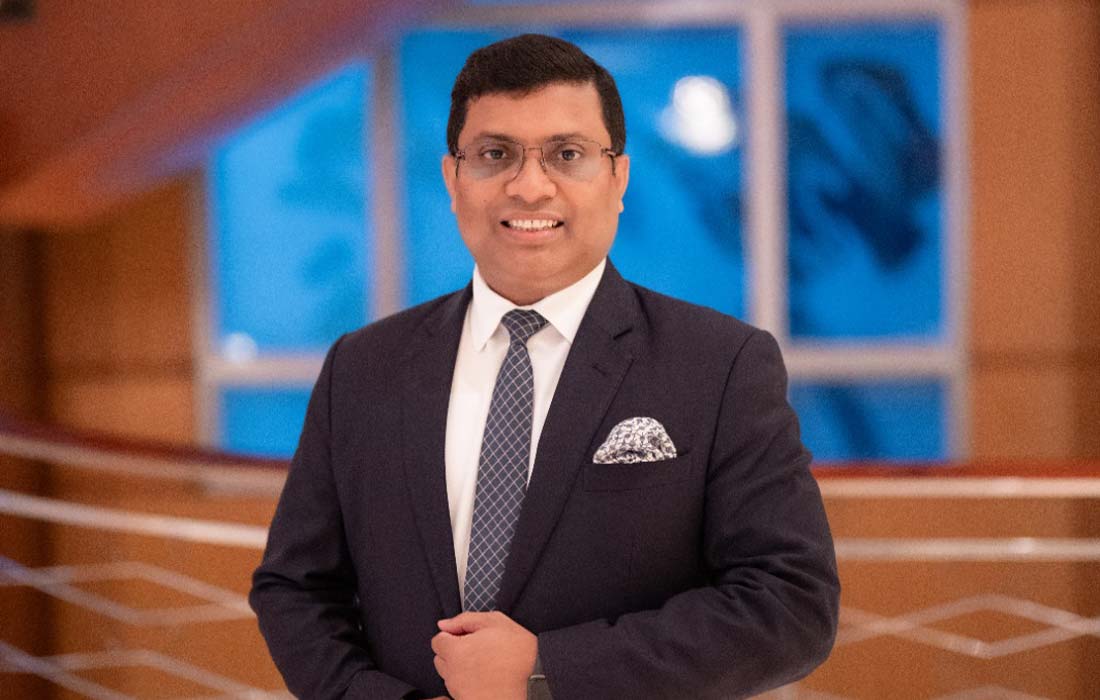
Khabir Uddin Ahmed, Chairman of Arunima Resort Golf Club, Founder President of the Tourism Resort Industries Association of Bangladesh (TRIAB), Executive Committee Member of the Bangladesh Golf Federation and President of the Bangladesh Adventure Tourism Association, has long advocated stronger regulation, skills development and private-sector participation in Bangladesh’s tourism industry. In this interview with Aviation Express, he discusses the country’s ambitious tourism targets, infrastructure and skills gaps, the regulation of resorts, and the potential of golf and other specialised tourism products.
Bangladesh’s Tourism Mega Plan (2026–2040) targets 55.7 million tourists and 2.19 crore jobs by 2040. As TRIAB’s founding president, how realistic do you consider these targets?
I believe the target is highly ambitious, but certainly not impossible. Setting a target alone will not be enough; we will also need major improvements in infrastructure, skilled human resources, safety and security, connectivity, and international promotion in order to achieve it.
The way the current government and the Ministry of Tourism are giving importance to this sector, I believe both increased foreign tourist arrivals and large-scale employment generation are achievable if this momentum continues. I am optimistic.
The Honourable Prime Minister is tourism-friendly and is giving due importance to the development of the sector. At the same time, the concerned minister is also working tirelessly to move the sector forward. However, if we are to achieve these targets, several fundamental areas must receive special attention from now on.
There is also much for us to learn from the Honourable Prime Minister. Government officials should work in the field in the same spirit. Since tourism is a service sector, we need smart, skilled and service-minded people working in it. Officials should not remain confined to their offices; they need to work in the field and demonstrate greater commitment and sincerity.
First, we need to develop skilled manpower for the tourism sector. To serve such a large number of tourists, we will require trained and competent people at every level—not only in hotels and resorts, but also in transport, tour guiding, food and hospitality services, airports and tour operations.
Second, we must ensure quality road, bridge, ferry and transport connectivity to tourism destinations. I have travelled to many countries around the world and have seen how easy, comfortable and tourist-friendly transport arrangements are from airports to different tourism destinations. In Bangladesh, however, road connectivity and transportation in many areas have yet to reach the desired standard. Even important works such as a ferry terminal, bridge or connecting road can remain delayed for years because of administrative complications. If tourism is to move forward, such obstacles must be removed quickly.
The ease, safety and comfort with which a foreign tourist can travel from the airport to his or her destination have a major impact on the overall experience of visiting Bangladesh.
Third, Bangladesh needs stronger branding and promotion of its tourism destinations in the international market. In terms of natural beauty and diversity, I believe Bangladesh is no less attractive than many other countries in the world. Our main weakness is promotion. We have extraordinary diversity—the Sundarbans, Cox’s Bazar, hills, haors, rivers, rural Bengal, archaeological sites and historical attractions—but these are still not sufficiently known to international tourists.
At the same time, we must ensure tourist safety. Security inside most of our resorts is relatively well controlled, but foreign tourists may still feel concerned about safety and comfort on roads, in public transport and in other public areas. The Tourist Police therefore need to be further strengthened and made more effective.
We also need an adequate number of trained tour guides who can assist foreign tourists throughout their journeys when required. District administrations and local authorities in every district must also play an active role in tourism development and tourist safety.
Most importantly, there must be coordinated action. The Bangladesh Tourism Board—BTB, Bangladesh Parjatan Corporation—BPC, the Ministry of Civil Aviation and Tourism, district administrations, tour operators, hotels, resorts and all other relevant stakeholders need to work towards the same goal.
Tourism is a multidimensional sector. Ministries and government agencies responsible for the environment, culture, communication, land, home affairs, foreign affairs, education, shipping, local government, youth and sports, among others, are directly or indirectly connected with tourism. Therefore, the Ministry of Tourism alone cannot do everything. All relevant ministries must become more committed to tourism and more tourism-friendly.
In particular, tourism-related projects or files should not remain unnecessarily delayed for long periods. Decisions and implementation relating to roads, ferries, bridges, approvals or other essential matters must be completed quickly. Even a small administrative delay can hold back a major tourism investment or destination development for years.
If these issues are addressed through long-term and coordinated planning, I believe there is a real possibility of achieving the 2040 target.

You have stressed the need for skilled, service-minded people. Where should Bangladesh begin developing this workforce?
I believe tourism education and skills development should begin not only at university level, but from the secondary level as well.
Tourism and Hospitality Management education should not be limited to classrooms and textbooks. Students must be given opportunities to gain practical experience alongside their academic studies. Schools and colleges can arrange educational visits to hotels, resorts, tourism destinations and tourism establishments. This will help students develop an understanding of tourism, an interest in the sector and a service-oriented mindset from an early age.
Effective partnerships between universities and hotels and resorts are extremely important. Students should have regular opportunities for internships, industry placements and hands-on training.
Fieldwork in tourism education also needs to be expanded significantly. When students visit tourism destinations, hotels, resorts, tour operators and other establishments and gain real working experience, their skills improve considerably. Hospitality is a sector in which full competence cannot be achieved through textbooks alone; practical experience is essential.
This responsibility does not rest with one or two institutions. Both public and private educational institutions need to come forward. At the same time, there must be strong cooperation between the government and the private tourism industry.
Under the Skills for Industry Competitiveness and Innovation Program—SICIP, operated by the Finance Division of the Ministry of Finance, the Tourism & Hospitality Industry Skills Council—T&H ISC is playing an important role in developing skilled manpower. I have been serving as Vice Chairman of this council for a long time. Training programmes are being conducted through several training institutions to develop skilled manpower for the tourism and hospitality sector.
At the same time, in coordination with the National Skills Development Authority—NSDA, T&H ISC is also working on sector-specific skills standards, curricula, training, assessment and certification.
In addition, the Bangladesh Tourism Board, Bangladesh Parjatan Corporation, various public and private training institutions, and universities are providing education and training in tourism and hospitality.
Considering the enormous potential of Bangladesh’s tourism sector, tourism could be introduced as a separate subject from the secondary level, or at least incorporated into the curriculum as part of mainstream education.
Our goal should be that when a student graduates from university, he or she leaves not only with a certificate or degree, but also with practical skills, professionalism and a strong service mentality.
Tourism’s contribution to GDP is currently around 2%, while the target is 6–7%. What would it take to reach that level?
I believe increasing tourism’s contribution to GDP from around 2% to 6–7% is achievable. However, tourism cannot be treated as an isolated sector.
Alongside the Ministry of Civil Aviation and Tourism, the ministries responsible for culture, youth and sports, as well as other ministries and agencies directly or indirectly connected with tourism, must work in a coordinated manner.
A foreign tourist does not come to Bangladesh simply to stay in a hotel. He or she comes to experience our culture, heritage, food, nature, sports, rural life and the way our people live. Therefore, we need an integrated tourism approach.
At the same time, Bangladesh’s embassies and missions abroad need to become much more actively involved in tourism promotion. If our embassies regularly present Bangladesh as a tourism destination and work with tour operators, travel media, airlines and tourism organisations in their respective countries, inbound tourism can increase significantly.
Tourism is a sector that is directly connected with many industries and services. When tourist arrivals increase, the benefits are not limited to hotels. Transport, food, small businesses, handicrafts, agriculture, entertainment and airlines all benefit across different layers of the economy. Tourism can therefore become a major source of both employment and foreign exchange earnings.
We also need to focus not only on the number of tourists, but on how long each tourist stays in Bangladesh and how much they spend. If we can increase the average length of stay and average tourist spending, tourism’s contribution to GDP can rise much faster.
Our long-term goal should be to transform tourism into one of the country’s major foreign exchange earning and employment-generating sectors.
Resorts are already covered by the Hotel and Restaurant Act 2014. Do you think the existing framework is sufficient, or do resorts need separate regulations?
Unlicensed resorts remain an important problem for Bangladesh’s tourism sector. In tourism, some of the most important issues are tourist safety, service quality and institutional accountability.
If an establishment operates without the necessary approvals and without following the required rules and regulations, questions arise regarding tourist safety, hygiene, fire safety, environmental management and service standards.
A poor experience does not damage only the reputation of one resort. If a foreign tourist has a negative experience there, it can have an adverse impact on the overall international image of Bangladesh tourism.
Under the Bangladesh Hotel and Restaurant Act 2014, resorts are already included within the existing legal framework, and under the 2016 rules, resorts are also recognised as a type of business. So legally, resorts are not outside the regulatory system.
However, the reality is that the operation of a resort is in many ways different from that of a conventional hotel. Today we have eco-resorts, agro-resorts, nature resorts, adventure resorts and other types of tourism products. Therefore, a detailed and realistic regulatory guideline is needed, taking into account factors such as location, land area, environment, recreational facilities, safety, open space, nature-based activities and other resort-specific features.
Considering this reality, TRIAB has long highlighted the need for a clear regulatory framework for the resort sector. Through my initiative and with the cooperation of TRIAB members, a separate set of regulations for resorts was formulated in 2019, under which a separate definition of a resort and the required standards were set out. However, in practice, it is hardly being implemented. Resorts still remain under the hotel law, and although a separate set of regulations was prepared, its implementation is almost absent. Even without a completely separate law, the problem could be addressed if the existing regulations were properly enforced and strong regulatory control were ensured.
Our position is that resort operations must be brought within a proper regulatory framework. There should be accountability through approval from the relevant authorities, compliance with required standards and coordination with the relevant recognised association.
In reality, however, many resorts are still operating without properly complying with the necessary rules and regulations. As President of TRIAB, I wrote to the relevant ministry and to different district administrations regarding this issue. As part of that process, I also held meetings with the Dhaka district administration.
Unfortunately, TRIAB’s organisational activities have been kept stagnant for a long time. In our view, certain conspiracies have obstructed the organisation’s normal activities. We have written repeatedly to the relevant authorities and taken several initiatives to resolve the matter, but no satisfactory solution has yet been achieved. As a result, TRIAB has not been able to work for tourism development as actively as it did before.
I hope the relevant authorities will resolve these issues quickly, transparently and lawfully so that TRIAB can once again contribute, as it has always done, to the development of Bangladesh’s tourism sector with its full capacity.
The main point is this: whether there should be a separate law or stronger regulation under the existing law is ultimately a matter for policymakers. But whatever system is adopted, it must ensure tourist safety, service quality, environmental responsibility and business accountability.

Arunima has evolved from an agro-based, nature-driven eco-resort into a golf destination. Can golf tourism become more than a niche product in Bangladesh?
I believe golf tourism has strong potential to develop into a highly attractive specialised tourism product in Bangladesh.
Arunima’s own journey demonstrates how an agro-based, nature-driven eco-resort can successfully expand into golf and create a more diverse tourism experience. By combining nature, rural life and golf within the same destination, we can appeal to different categories of tourists while offering them a distinctive experience of Bangladesh.
If we look at golf only as a sport, we underestimate its potential. In many countries, golf tourism is a high-value tourism segment. Golf tourists generally stay longer and spend more on accommodation, food, transportation, recreation and other services.
Our neighbouring and regional countries are already using golf tourism as an important tourism product. India, Thailand, Malaysia and several other Asian countries have developed special packages, golf courses and resort-based experiences for international golf tourists. Japan, South Korea and other East Asian countries also have large golf markets.
Bangladesh can attract a share of that market. One of our major advantages is that we can offer a golf experience at a comparatively lower cost than many international destinations. During the same trip, a tourist can also experience Bangladesh’s rural life, nature, culture and food.
This is particularly relevant to Arunima because golf does not replace its agro-based and nature-driven character; rather, it adds another dimension to the overall experience. A visitor can enjoy golf while also experiencing rural Bengal, nature, agriculture, local culture and food within the same destination.
Another important point is that regular golfers often look for opportunities to play at local golf courses even when travelling for business. Therefore, golf tourism can also be linked with business tourism. This can contribute to the expansion of business across different sectors.
Golf in Bangladesh should not remain limited to foreigners or certain communities. There is still a perception in our country that golf is only a sport for the rich. Globally, golf can be an expensive sport, but in Bangladesh the cost is exceptionally affordable by comparison. Golf is therefore within the reach of a much larger number of people than is commonly perceived. We need to remove this misconception and take the game to a much wider section of society.
The expansion of golf can create new employment opportunities, engage young people in sports and provide them with healthy recreational opportunities. Arunima Resort Golf Club is working towards this objective as a privately developed golf destination in Bangladesh. We are also providing free golf training to local students and underprivileged people so that the sport can reach a wider section of society.
People should be given the opportunity to experience golf at least once. In my experience, when someone holds a golf club and tries the game for the first time, it often creates an interest to play again. In other words, the experience of golf itself creates further interest.
If the government properly promotes golf tourism internationally, supports appropriate marketing, develops affordable packages and strengthens connections with international tour operators, golf tourism can become a specialised but highly valuable tourism market for Bangladesh.
More importantly, Arunima shows that golf tourism does not have to stand alone. It can be combined with agro-tourism, eco-tourism, rural tourism and nature-based tourism. This combination can give Bangladesh a distinctive tourism product and help us attract both domestic and international visitors.

What should Bangladesh do to promote products such as Arunima and compete with neighbouring destinations?
First, we need to identify clearly which market we are targeting for each tourism product. The same promotional approach will not work for every type of tourist.
For example, there is strong interest in golf in countries such as Japan and South Korea. Since golf tourism in Bangladesh can be relatively affordable, it can be attractive to tourists from those markets. We should therefore present specific Bangladesh tourism packages to them centred around golf, nature and rural experiences.
We also need to work much more closely with international tour operators. In particular, foreign tourists who visit India, Nepal, Bhutan, Thailand or other Southeast Asian countries should be encouraged to include Bangladesh as an additional destination in their itineraries.
For this, Bangladesh should participate regularly, both at the government and private-sector levels, in international travel and tourism fairs in those countries. Simply setting up a stall is not enough. Meetings should be planned in advance with tour operators, airlines, travel agents and potential buyers.
We can develop special three- to four-day Bangladesh packages. This would allow a tourist visiting a neighbouring country to also experience golf, rural Bengal, heritage, food and nature in Bangladesh.
The Bangladesh Tourism Board’s promotional materials and video campaigns also need to be more targeted. A single general video should not be used for every country. We need to research what tourists in each market prefer and create content accordingly.
Bangladesh tourism advertisements can be displayed at major international airports abroad. We should also promote our destinations through airline in-flight magazines, infotainment systems, international travel magazines, social media and digital travel platforms.
Private investment in tourism also needs to be encouraged. In particular, the government may consider reasonable duty facilities, VAT and tax incentives, and tourism-friendly investment policies for the import of quality vehicles required for tourist transportation. A good resort or tourism product must also provide quality transport, security and service. If the costs of these services become too high, Bangladesh’s tourism packages will struggle to compete on price with neighbouring countries.
Therefore, I would say that the government may consider policy support, a rational duty structure and VAT-tax incentives for the import of vehicles and specialised equipment required by the tourism sector. At the same time, it must be ensured that these benefits are received only by genuine tourism businesses. In addition, VAT and tax burdens on businesses in this sector should be rationalised, and different forms of incentives should be provided.
Our marketing must be very precise—putting the right tourism product in front of the right audience in the right market. With government support, proper branding and a supportive policy environment for private entrepreneurs, innovative initiatives such as Arunima can compete successfully not only in the domestic market, but also across the regional tourism market.

Make Comment
Login to CommentPopular News



Subscribe to News Letter
Latest News